The New Playbook: Using AI to Develop Teams That Actually Get Better

AI isn’t replacing good trainers and coaches. It’s exposing who the good ones really are. The organizations that adapt intentionally will build capability faster — the ones that don’t will drown in their own noise.
Physical and Cognitive Training Follow the Same Rules
For the past several years I’ve lived inside two training worlds at once: competing in strongman and powerlifting, and building advanced training systems inside tech that aim to match the speed of the AI revolution. And the truth is simple: physical training and skill training obey similar laws.
Random work creates random results.
Structured, intentional work creates adaptation.
AI doesn’t change that. It just shines a bright light on the foundation you already have.
If your programs are shallow, AI exposes it.
If your training inventory is chaotic, AI amplifies it.
If your team lacks judgment, AI won’t fix it.
If your culture is built on volume instead of capability, AI accelerates the noise.
So the real conversation becomes: How do we use AI intentionally to build actual capability, not just more content?
What AI Really Changes
Speed
You can generate examples, scenarios, explanations, and practice reps in seconds. This doesn’t replace trainers — it frees them to spend time on coaching and diagnosing.
Personalization
The one-size-fits-all deck is dead.
- Role-specific variations
- Beginner/advanced pathways
- Alternate explanations by learning style
- Adaptive practice sessions
- Targeted interventions for skill gaps
This is what training should’ve always been. AI finally makes it possible at scale.
Translation
Not language — context. AI reshapes concepts for different roles, domains, and experience levels so the learner gets an explanation that actually lands.
Judgment: The Human Skill AI Can’t Replace
AI accelerates thinking. It does not accelerate judgment.
Your job shifts from teaching steps to teaching discernment. From presenting frameworks to showing when and why to use them. From “here’s the content” to “here’s how to think with this content.”
This is the highest form of training, and AI can’t replace it. It only raises the standard.
The Soreness Principle: Why Overload Breaks Learners
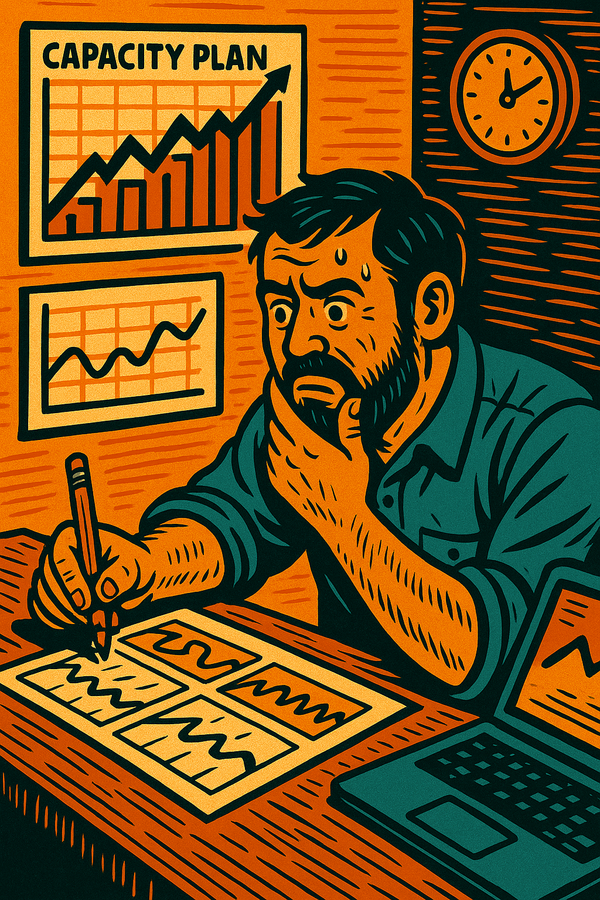
In strength training, too much volume with too little recovery kills progress. Cognitive overload works exactly the same way.
Right now, most organizations are drowning employees in decks, videos, updates, Slack channels, and random training drops. If someone tried to consume everything in a quarter, they’d need more time than their job even allows.
AI multiplies this unless trainers intentionally protect cognitive capacity.
AI speeds up the input.
Trainers must protect the learner’s ability to adapt.
Training Is a System, Not a Schedule
Training is not a calendar or a deck library. It’s the engineered development of capability over time. Just like strength, learning improves when:
- Volume is controlled
- Progression is intentional
- Stimulus is specific
- Recovery is protected
- Feedback loops are tight
These principles don’t change in an AI world — they become more important.
An AI-Enabled Training System
1. Inventory Everything
You can’t optimize or personalize what you can’t see. AI can scrape, categorize, and surface redundancies, but humans verify what’s real.
2. Define Skills, Behaviors, and Judgment
Tasks aren’t skills. Content isn’t capability. Build a capability map that defines what people actually need to do. AI can draft, but trainers refine.
3. Match Modalities to Skills
Knowledge is learned one way. Behavior another. Judgment and execution require something different. AI helps generate scenarios, difficulty scaling, and tailored practice — trainers deliver nuance and correction.
4. Remove the Noise
Mapping reveals redundant modules, outdated decks, and low-impact sessions. Cutting these frees cognitive capacity and recovers time for the entire org.
5. Personalize and Adapt
Once the system is clean, AI becomes a true multiplier. Now you can create role-based pathways, adaptive reps, targeted interventions, and contextualized scenarios at scale.
6. Teach Judgment Explicitly
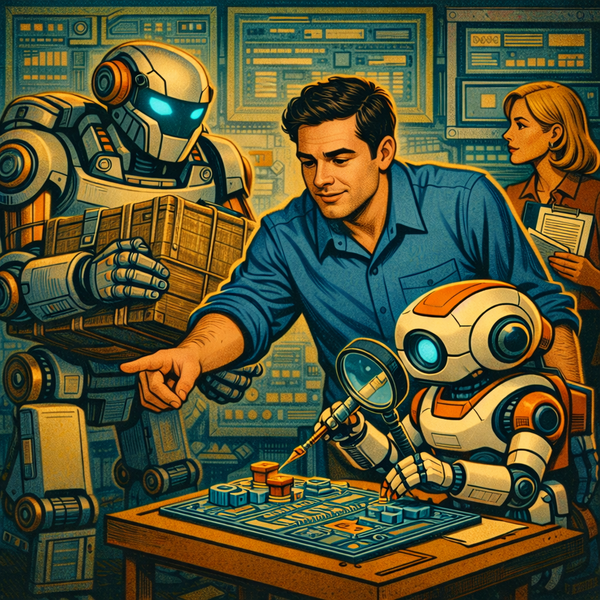
AI can simulate situations and provide reps, but humans still teach prioritization, interpretation, and tradeoffs. AI is the sparring partner — trainers are the coaches.
This Is the Best Time to Be in Learning
We entered this field because we care about helping people grow. AI doesn’t threaten that — it elevates it.
The profession is shifting:
- Less content creation, more capability engineering
- Less broadcasting, more coaching
- Less fragmentation, more intentional systems
- Less time formatting decks, more time building judgment
AI isn’t the future of training.
AI-enabled capability development is.
And we’re the ones who get to build it.